
These innovative courses promote experiential learning by incorporating observation, hands-on experimentation, and skill-building perspectives more commonly associated with the natural sciences. Courses across the humanistic disciplines can turn the Colby Museum of Art, Special Collections in Miller Library, or off-campus locations across Maine into laboratories. Humanities labs add new dimensions to the intrinsic value in studying the humanities.
Fall 2024 Humanities Lab Course
Four-Credit hours. Lisle.
We learn how to analyze and interpret urban geography, history, and culture, using Portland (Maine) as our laboratory. We will explore Portlands history, with an eye toward contemporary urban problems and solutions. Major topics include indigenous history, immigration, labor, urban planning, cultural tourism, gentrification, policing, homelessness, and political activism. Students learn how to construct interactive digital maps. They will also learn how to conduct fieldwork, in a series of site visits. Our work will be collaborative, as we collectively imagine, design, and publish a digital, public-facing atlas.
Fall 2024 Humanities Lab Course
Four-credit hours. Plesch.
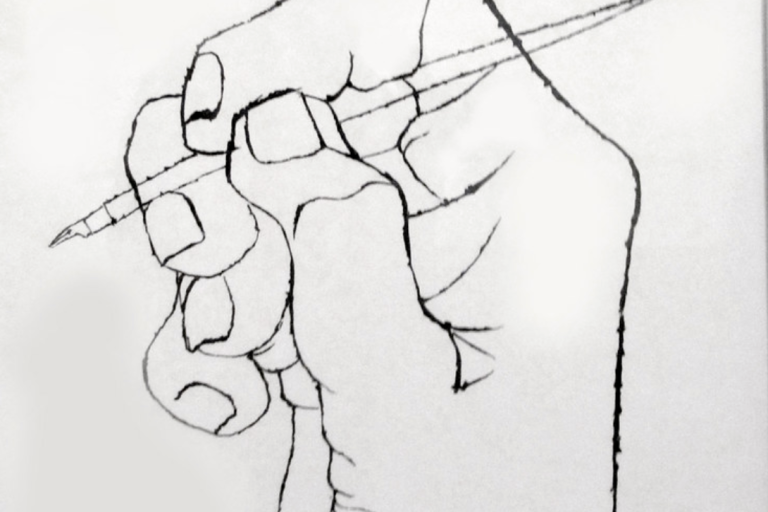
In 2024, the Colby College Museum of Art acquired eight books with original art and calligraphy by Ben Shahn (1898–1969). Students will study these extraordinary works along with Shahn’s illustrated books, considering them in a range of contexts, such as the artist’s life and career (and in particular his social activism and Jewish identity) and book arts (book design and production, calligraphy, illustration, etc.), while reflecting on websites as a format for visual material and art historical research. Students are expected to complete research and writing assignments, make oral presentations, and contribute to the creation of a website.
Spring 2025 Lab Course
Four-credit hours. Sheehan.
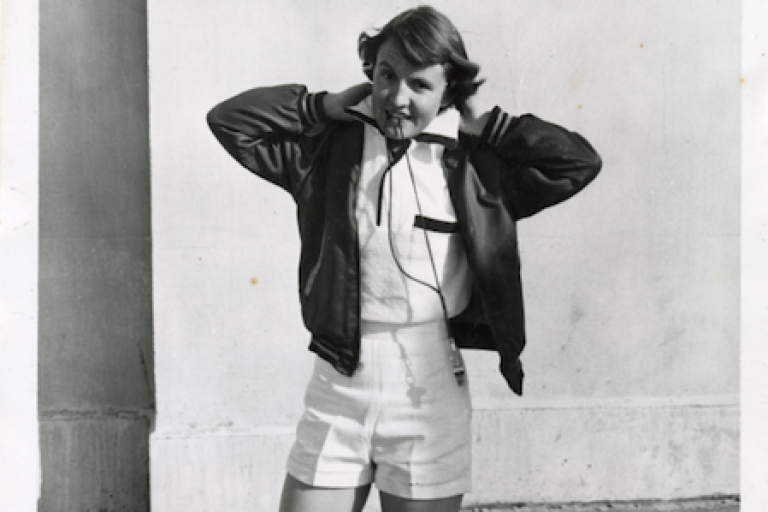
This new humanities lab introduces students to the history of
photography through close study of photographs at the Colby College Museum of Art, from early vernacular objects of the nineteenth century to contemporary art. Students analyze the formal, technological, social, cultural, and political dimensions of photographic images, while examining how our museum’s collection, built over decades, tells a particular story about the medium—one of photography’s many histories.
Spring 2025 Humanities Labs
Four-credit hours. Rizzo.
This course will move on two distinct but complementary tracks. The first track entails an introduction to small press publishing, in the aftermath of the digital revolution. The second will introduce students to electronic literature and put them to work on an anthology of electronic poetry. For a working definition of electronic poetry, as well as a few
representative examples, see the Electronic Literature Organization website and their Collections, or Leonardo Flores’ blog and one of his masterful lectures on this subject. In brief, electronic poetry is an umbrella term designating a wide range of approaches to poetry that exploit the interactive and computational possibilities afforded by computer science.
Through geographical and architectural fieldwork, students construct an online archive of Waterville’s built environment using architectural sketches, photographs, interviews, and archival research. They analyze and interpret the town’s material and spatial character, track and explain changes across time, and publish their interpretations online using innovative digital mapping technologies. Learn more here: web.colby.edu/mapping-waterville/
A hands-on, collaborative workshop in which students become curators and create a museum exhibition at Common Street Arts, in downtown Waterville. Students learn through studio visits, artist interviews, readings, presentations, and writing assignments. They jointly select the artwork, produce a press release, write labels and a catalogue, and then install the exhibition before hosting a grand opening. To view the exhibit website they created, visit web.colby.edu/somewhere
Students read Shakespeare plays together, learn about their Renaissance contexts, and explore how and why Shakespeare informs American history and identity in pervasive ways. Working with materials in Colby’s Special Collections as well as primary-source databases and secondary reading, students install and introduce to the public their own library exhibition, “Shakespeare in 19th-century America.”
Through hands-on experience with archival and primary source materials in Special Collections, students gain confidence as scholars and participate in writing the College’s history. Supported by professional archivists and the course instructor, students develop independent research projects on Colby’s rich past, exploring everything from why Colby’s mascot is the “Mule” to early-nineteenth-century students’ commitment to antislavery.
Students trace the historical evolution of Italian food culture since classical times, and examine the extraordinary significance of food for Italian national identity through various historical, cross-cultural, and theoretical perspectives, drawing from history, anthropology, sociology, art, and literature. During the weekly lab they prepare classic Italian recipes. Perfetto!
After studying ethnographic field methods and basic filmmaking, students take field trips to document and record the musical cultures of Maine’s ethnic and racial communities, including Penobscot, Lebanese, Somali, Russian, and French-Canadian (the group under study rotates on a yearly basis). Students present their final research project in the form of a documentary film.