
While the word “island” might conjure an image of isolation—the castaway on a pile of sand with a single palm tree—long, global histories of insularity and archipelagic thinking complicate such an image. Islands have been sites of dynamic cultural exchange for centuries. Today, islands carry an outsized burden in terms of environmental catastrophes, historical legacies of colonization, and the continued subjugation of marginalized people. De-centering continental landmasses, our theme surfaces these complex tensions and invites our communities to think through pressing contemporary issues. Island residents and their diasporas offer generative ideas for responding to the climate crisis through solidarities, rather than extractive technologies. Islands—as both place and theoretical framework—open myriad transdisciplinary possibilities. At its heart, archipelagic thinking enables endless fluid connections that illuminate relational power dynamics.
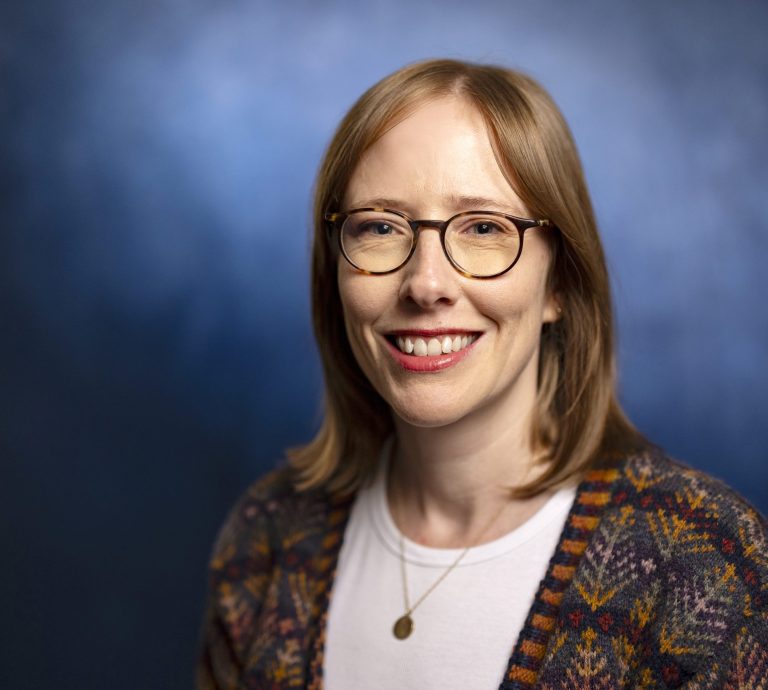
Kelly Brignac is a historian of the Atlantic World, particularly the abolition of slavery and the rise of forced labor practices that came after slavery’s end. Her current book project, “Immoral Debt: Abolition, Labor, and the End of Slavery in the French Empire” (forthcoming, University of Pennsylvania Press) investigates the forced indenture of Africans in the French Atlantic and Indian Oceans after the abolition of trans-Atlantic slaving and slavery. Under this system, French administrators and colonists bought enslaved men, women, and children from African slaving markets, then forced the captive into a fourteen-year indenture contract for French colonists. French administrators argued that the practice “redeemed” Africans from slavery, but a close reading of administrative correspondence and indenture contracts reveals that the workers understood themselves to be traded as captives. The project investigates themes of power and coercion in its exploration of the legal mechanisms used to hold Africans in captivity during the age of abolition. Research for the project in France (including the overseas department of Réunion), Senegal, and the U.K. has been generously supported by a number of funders, including the National Endowment for the Humanities, the Fulbright IIE, and Harvard University.
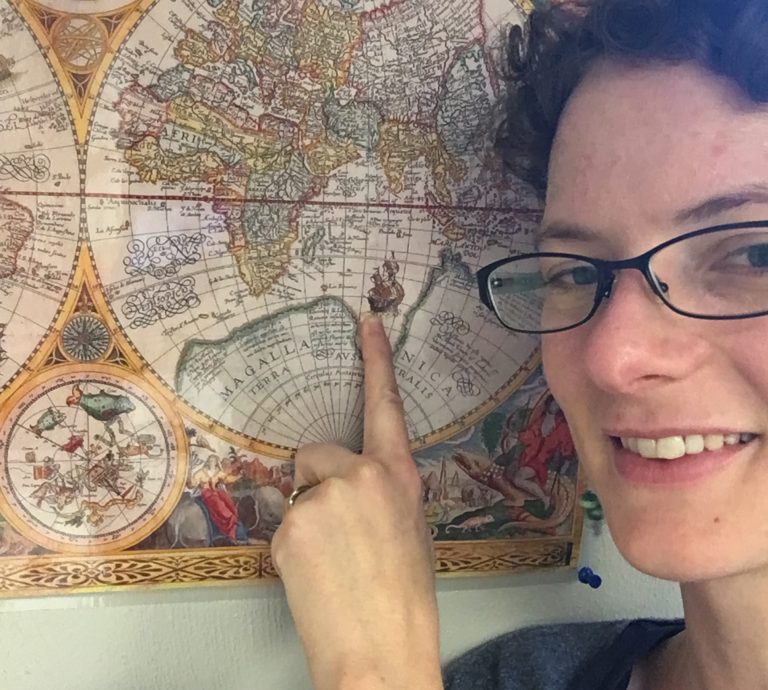
Dyani Johns Taff is Assistant Professor of English at Colby College in Waterville, Maine. She writes and teaches about early modern literature, gender studies, and the maritime humanities, as well as environmental justice and premodern critical race studies. She has published essays on Chaucer, Spenser, Shakespeare, Jonson, Cavendish, Milton, and Pulter and is currently at work on a book titled Gendered Seascapes and Monarchy in Early Modern English Culture. She is also developing a new project centered on monstrosity and wetscapes in early modern protest literature. You can find out more about her work at dyanijt.github.io.
Islands Course Unit
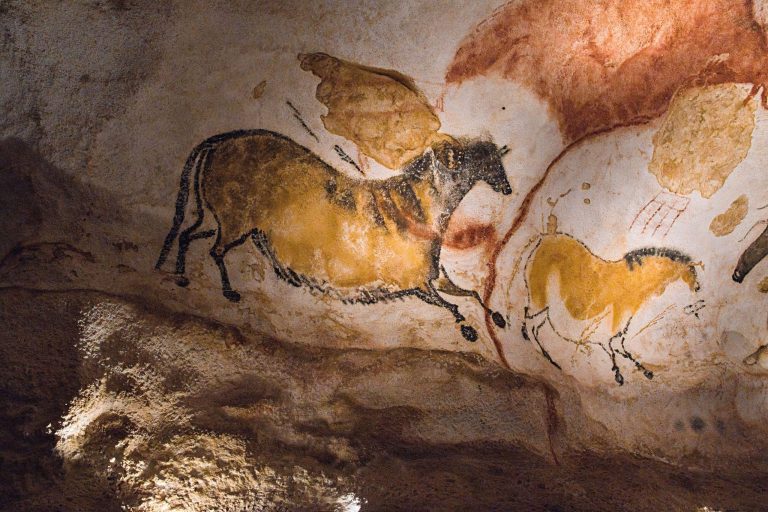
Four credit hours. Plesch.
An examination of the history of the Western tradition of visual arts from cave painting through the end of the Middle Ages. Through lectures, class discussion, museum visits, provides an introduction to the descriptive and critical analysis of works of art in both their formal and material makeup as well as their dependency upon and/or interrelationship with cultural, religious, economic, and historical trends.

Islands Course Unit Four-credit hours. Miglianti.
Examines representations of the mafia in Italian and American film, tracing the transformation of a rural Sicilian phenomenon into a transnational cultural myth. Through the analysis of cinematic texts (by Francis Ford Coppola, Martin Scorsese, Marco Tullio Giordana, Lina Wertmüller, and others) alongside historical, literary, and critical readings, the course explores how mafia movies construct and circulate narratives of ethnic identity, migration, gender roles, family, power, and social justice. No prerequisite, all students welcome.

Humanities Lab.
Four credit hours. Kim.
Poised in the mid-2010s to be the next major piece of technology for widespread adaptation, the shift to virtual reality and augmented reality that everyone anticipated never occurred. This course looks to investigate virtual reality and augmented reality, studying the particularities, its affordances, and especially the frictions. By hands-on usage paired with readings from cinema and media studies and continental philosophy, students will study virtual reality and augmented reality as a way to hone their critical media analysis faculties so that they can better navigate and understand the implications of a constantly-changing media and technology landscape.

Islands Course Unit
Four credit hours. Konya.
What are the nature and purpose of the modern state or of any political community? What is freedom? What is justice? How do such ideals relate to the design and functioning of political institutions? Political theory is the subfield within political science that addresses these and related normative and methodologically foundational questions. Introduction to classic works of political theory by Aristotle, Hobbes, Locke, Rousseau, Marx, and Mill. Students will demonstrate their understanding of the primary texts and their ability to formulate original arguments in political theory by means of papers and exams; class sessions are conducted as a mixture of lecture and discussion.
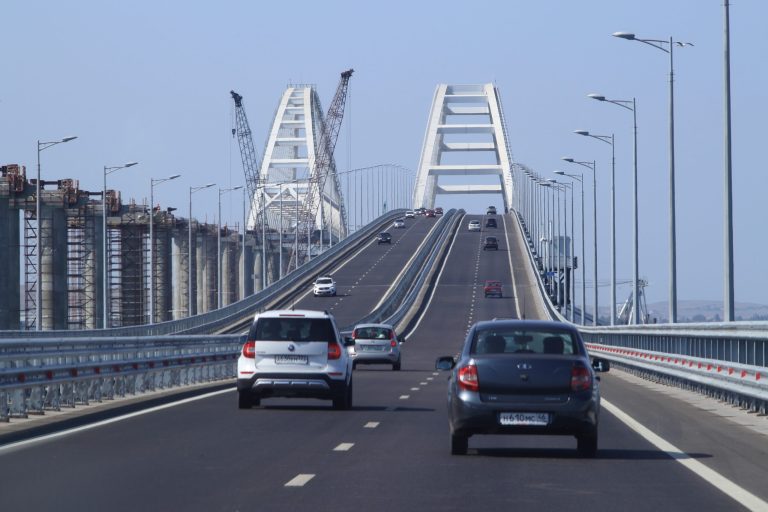
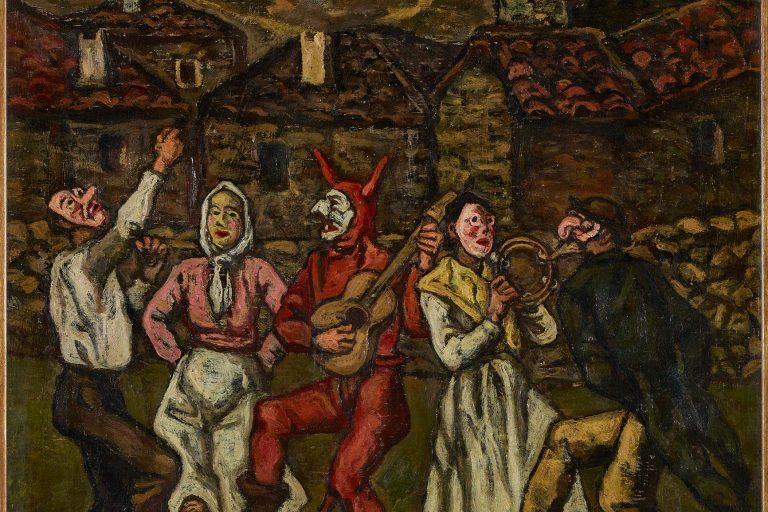
Islands Course Unit Four credit hours. Monastireva-Ansdell.
Islands Course Unit
Four credit hours. Zapata.
This course explores how the sounds of the Spanish-speaking world reflect history, culture, and society. Moving beyond the written word, students will study soundscapes through the analysis of novels, films, and art. The course provides students with analytical tools to interpret and compare different works (from 16th-century classics to contemporary cinema) to examine how sound and silence reveal deep-seated social dynamics like race, gender, and social class. Through the investigation of these sonic environments, students will examine the relationship between human societies and the natural world, and develop strong skills in critical thinking and argumentation.
Islands Course Unit.
Four credit hours. White.

Humanities Lab
Four-credit hours. Millones.
This course combines reading and analyzing creative non-fiction as a literary genre with a workshop in which students compose their own pieces of writing. We will focus on how sensory experiences with natural environments are adapted into works of non-fiction. Students explore the question of how to allow space for “voices” from non-human beings in a world dominated by anthropocentrism. Students will be able to recognize the main features of creative non-fiction and produce their own examples. Also, students will be able to evaluate key Environmental Humanities ideas in non-fiction nature writing from Spanish and Latin American authors.
What does it mean to be free, to imagine freedom? Conversely, why are logics of control and capture adopted? How and to what ends is it possible to resist these strictures? How is the body implicated in freedom and in capture?
Play is a term that spans a gamut of endeavors in the liberal arts without resolving the tensions. Bounding and bouncing across diverse histories and geographies, play connects action and rest, pleasure and exhaustion, young and old, human and nonhuman, and intellect and whimsy. This two-year theme (23-24 and 24-25) invites the campus and its community partners to explore, embody, and enact the complications of the theme. Engaging playful paradoxes as well as the inequalities that surround the theme, we ask: Is it work to intellectualize play? How and when is playing around seen as a subversive and even dangerous act? Who gets to play, and who doesn’t? Play, as practice and concept, challenges the demands of intellectual rigor, offering possibilities for haptic engagement, queer curiosities, happenings and actions, and fun.
Theme Sponsors
Dean Allbritton, Spanish
Phillip Fang, Sociology
Nazli Konya, Global Studies
Chris Walker, English
Keynote Speaker
John Green
“Food for Thought’ seeks to problematize and critically assess the complex social, cultural, environmental, political relationships that we have with food.
Food sustains all living beings (humans and non-humans) as it punctuates our daily lives and helps us survive and grow. It also embraces different realities of lived experiences across time and space, connecting the past with our present through the passing of ancestral traditions. And yet, it also reveals the fragility and the impermanence of bodies and organisms; it reinforces or challenges our privilege(s) (or lack thereof) to access food sources; it becomes instrumentalized and weaponized in warfare; it questions our complex relationship to nature, land, and sovereignty; it mirrors systemic inequalities entrenched in contemporary societies. Food highlights a living paradox: it represents the key ingredient that binds us together, and yet divides us when power dynamics and privilege are at play. By shedding light on these intricate realities, “Food for Thought’ seeks to problematize and critically assess the complex social, cultural, environmental, political relationships that we have with food.
Theme Sponsors
Audrey Brunetaux, French department
Danila Cannamela, Italian studies
Nikky-Guninder Kaur Singh, Religious Studies
Keynote Speaker
Bryant Terry
What does it mean to be free, to imagine freedom? Conversely, why are logics of control and capture adopted? How and to what ends is it possible to resist these strictures? How is the body implicated in freedom and in capture?
By enlisting the power of the humanities to translate experience, promote critical reflection, and offer fresh perspectives on challenging issues, Freedom and Captivity aims to incubate, amplify, and expand creative breakthroughs in these questions and in the relationship between freedom and captivity. Freedom and Captivity engages these larger ideas through three specific sub-themes: “Carcerality,” “Imagination and the Contained Body,” and “Freedoms.” While we welcome broad interpretations of the theme, our investment in freedom and captivity begins with two of the most pressing issues of our era: mass incarceration and displacement. These conditions are central to understanding the material and prescient stakes of freedom and captivity. While distinct, both incarceration and displacement draw together notions of subjectivity, embodiment, and space, asking us to consider the importance of space, geography, and the body in notions of freedom and capture. Why do we believe that the freedom of some depends on the captivity of others? “Carcerality” centers these pressing issues, which span social, political, economic, ecological, and geopolitical considerations, asking us to challenge the social constructs and material conditions of global captivity.
Theme Sponsors
Catherine Besteman, Anthropology
Chandra Bhimull, Anthropology and African American Studies
Gwynn Shanks, Performance, Theater, and Dance
Keynote Speaker
Nikole Hannah-Jones
Boundaries highlight or fix limits for people, places, objects, and events. But beyond this, boundaries mark relational sites where meaning, value, and belonging are made, reworked, and contested.
Should we approach boundaries as restrictive forces that constrict us within walls, borders, and lines, be they real or metaphorical, or as creative forces that overlap, move, and encourage us to rupture our own definitions of limits? Boundaries produce and attempt to manage marginal areas. They allow for a liminal space, a space “in-between” that is transitory, transient, unexpected and uncertain to erupt. This theme will allow us to interrogate the margins, those spaces in which subversive, often oppressed, knowledges and life ways take shape. If boundaries attempt to codify and construct worlds, what new worlds can emerge through the pursuit of this theme’s inquiry?
Theme Sponsors
AB Brown, Theater and Dance
Audrey Brunetaux, French and Francophone Studies
Keynote Speaker
Baratunde Thurston
Energy and its limits shape our lives, connecting artistic and technological innovations, local communities and oppressive structures of power, political activism and affective fatigue, histories of environmental change and societal collapse, and the origin of life and entropic fate of the universe.
This theme will bring together the arts, humanities, and social and natural sciences to investigate the space between energy and exhaustion as a metaphorical realm and lived reality. Together we will explore the endless potentiality of energy and limiting effects of exhaustion as they impact aesthetic innovation, literary imagination, political anxieties, environmental limits, and activist movements—all touching upon our shared past, current political realities, and collective futures.
Theme Sponsors
Dale Kocevski, Physics and Astronomy
Chris Walker, English and Environmental Humanities
Keynote Speaker
Naomi Klein
The Presence of the Past is everywhere: in our daily lives and activities, our natural, engineered, and social environments, our political commitments, our biasses and prejudices, our religious and spiritual convictions, our scientific and technological accomplishments and ambitions, and more.
What happens when competing versions of the past come into conflict? How is knowledge about the past produced? How do structures of power and prestige operating in the present shape our current knowledge of the across the disciplines?
Theme Sponsors
Elizabeth D. Leonard, History
Megan Cook, English
Keynote Speaker
Roxane Gay
Energy and its limits shape our lives, connecting artistic and technological innovations, local communities and oppressive structures of power, political activism and affective fatigue, histories of environmental change and societal collapse, and the origin of life and entropic fate of the universe.
Origins encourages a detailed and critical reflection of the social, historical, political, and cultural contexts that inform our understanding of who we are as humans, where we come from, and the trajectory we choose to follow in an increasingly interconnected global landscape.
Theme Sponsors
Shalini Le Gall, Museum of Art
Gianluca Rizzo, Studies
Arnout van der Meer, History
Keynote Speaker
Cornel West