
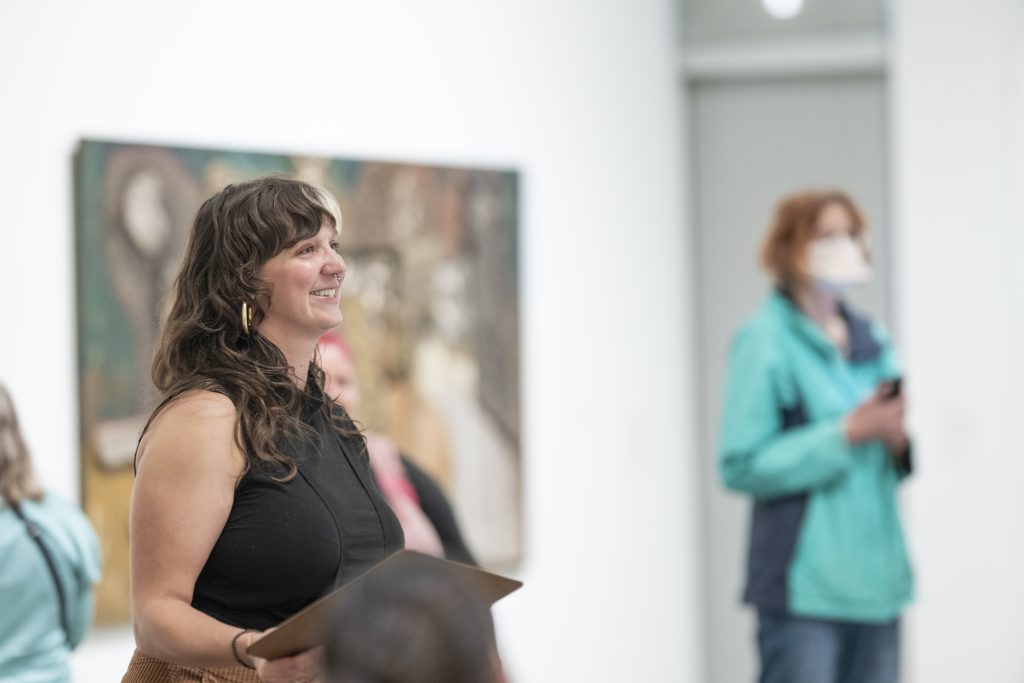
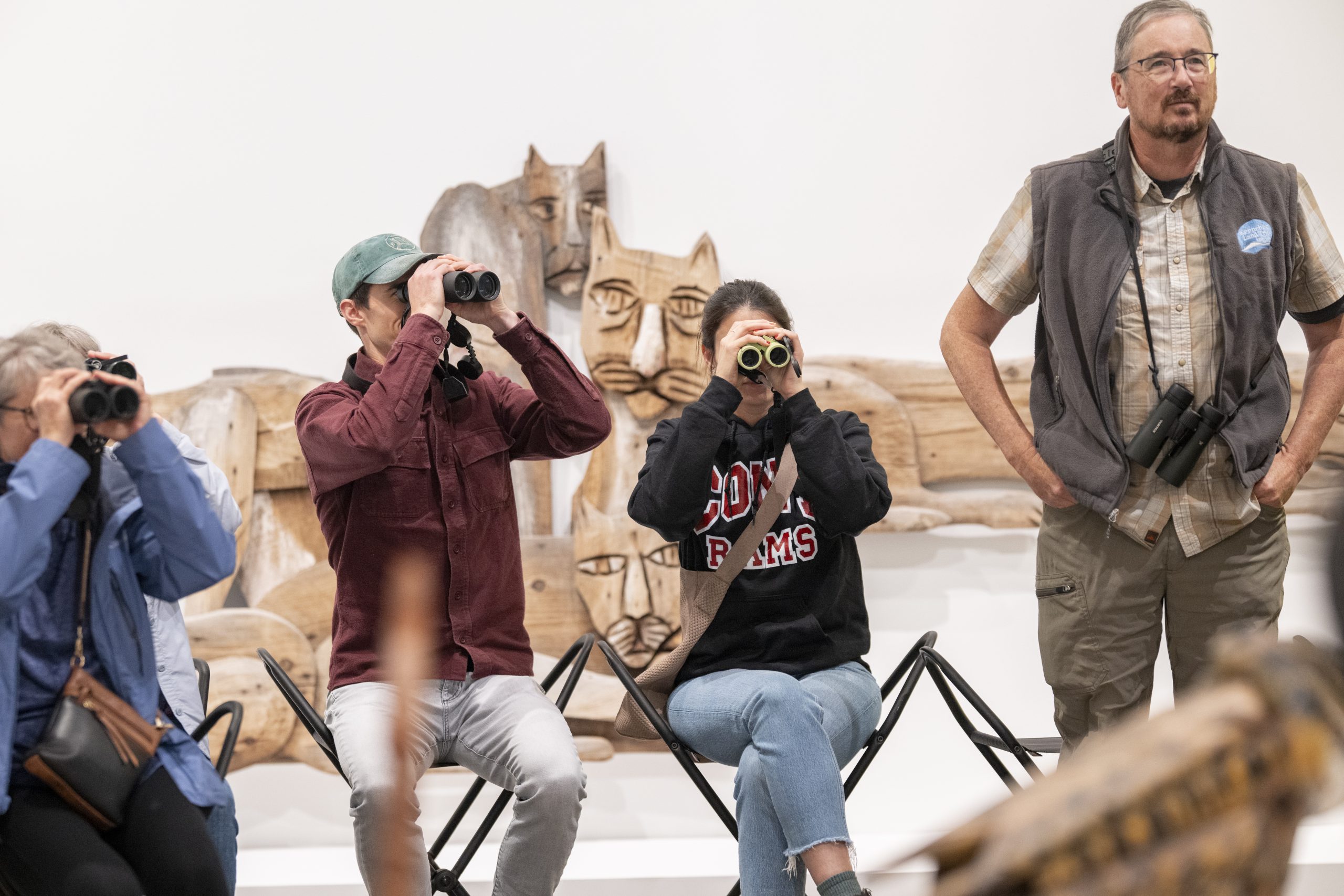
When you think of birding, you normally imagine the woods, a local trail, or maybe just looking out your window. Imagine bringing a pair of binoculars into an art space or gallery. How might that shift your perspective? Maybe you’d notice smaller details, or even begin to look beyond the art on the walls?
“Love Your Birds” asked those precise questions. Created as a collaboration between Environmental Humanities (EH) Fellow Ashton Wesner and Mirken Coordinator of Campus and Community Collaboration Virginia Lopez-Anido at the Colby Museum of Art, the public-facing program invited community members to bring binoculars into the Paul J. Schupf Art Center and look more deeply at the Bernard Langlais exhibition Love Your Langlais: A Community Curates! In conversation, Wesner shared that the program offered a way for community members to gather, bond over birding, and experience art in a new way.
Love Your Birds served as a precursor to Wesner’s Environmental Humanities Fellowship through the Center for the Arts and Humanities. Each year, the CAH supports faculty in developing courses and public programs they are passionate about. Faculty develop or rework courses connected to digital scholarship or environmental inquiry, with a highlight being a public program that links their scholarship to communities beyond the classroom.
One question Wesner has been circling as she thinks about community work is how people gather together, asking “how can we share spaces and resources that aim to amplify our community?” She’s interested in what happens when people with shared interests – like birding – produce knowledge together, and what that process looks like. That curiosity ultimately led her to create the “Love Your Birds” program. For Wesner, the program was about crafting spaces not centered on cataloging knowledge or occupying land, but on taking care of one another and thinking critically together.
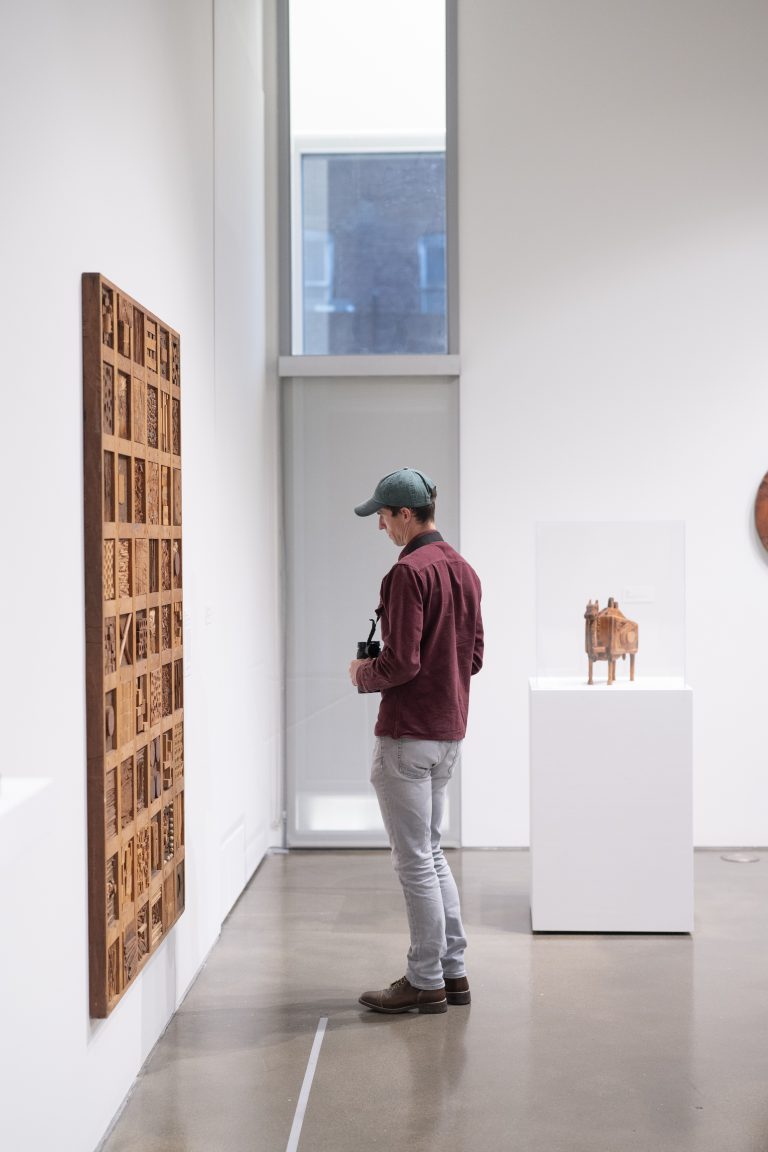
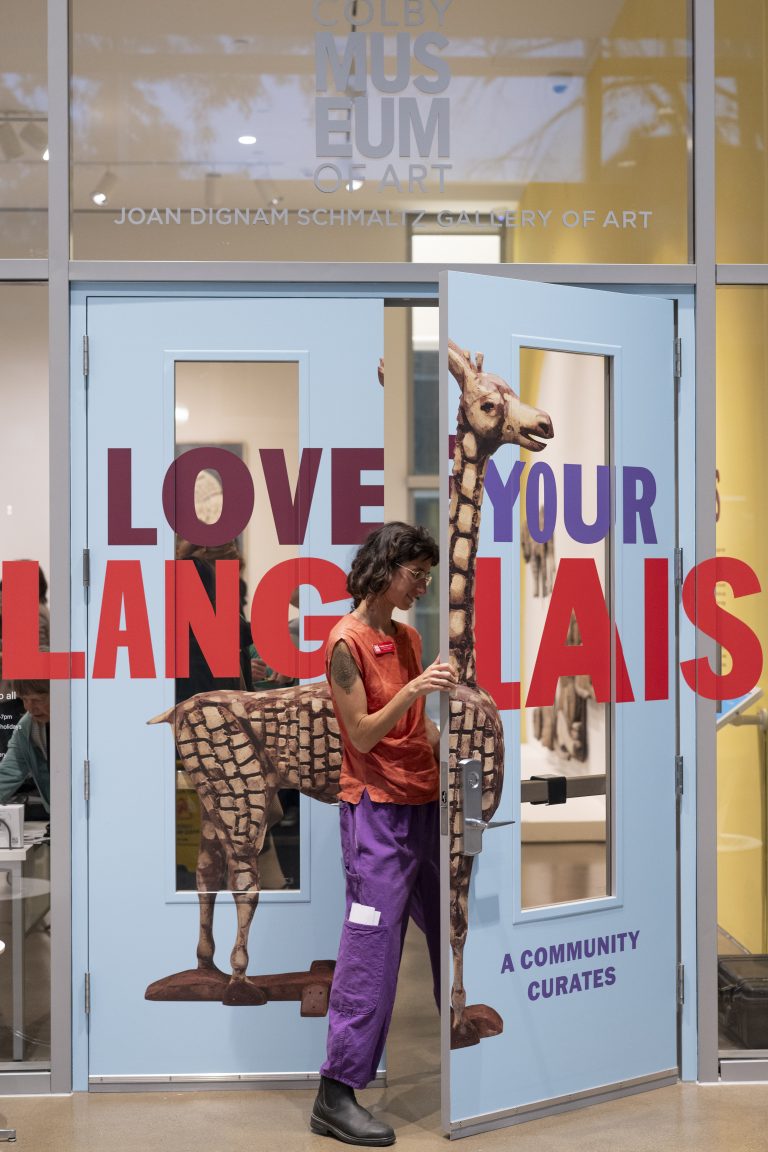
Participants came from many different communities: birding groups from Augusta and Waterville, members of the Colby community, people from the local arts scene, and others who were just discovering birding. Wesner described the program as loud with conversation and laughter. “It was a totally alternative mode of being in a gallery space, and this opened up space for play, inquiry, and lots of energy around community and connections.” For many attendees, it was their first time bringing binoculars into a gallery, an experience that became a place for connection and building relationships.
Reflecting on the program’s success, Wesner shared her interest in continuing the work, this time with a focus on children, and in finding new ways to nourish local communities. In Spring 2026, she’ll be running a student-facilitated book club centered on Birding for a Better World: A Guide to Finding Joy and Community in Nature by Molly Adams and Sydney Anderson. In collaboration with the Public Humanistic Inquiry Lab “Thinking with Animals”, she will also host a documentary screening at the Maine Film Center on February 19. So in many ways, “Love Your Birds” is not an endpoint, but the start of many more connections to be made.
Story by Portia Hardy, CAH Program Coordinator. Photography by Ben Wheeler.