
For undergraduates, conferences can open doors that classrooms rarely reach, introducing students to unfamiliar debates, unexpected mentors, and new ways of imagining their own work. Between 2025 and 2026, the Center for the Arts and Humanities has supported seven students traveling to conferences across the United States and abroad, helping them test their ideas in wider scholarly communities.
Daniel Kim ’28 will attend the 17th International Conference on Sport & Society in June 2026 at the University of Inland Norway. The conference, he explains, “seeks to take an interdisciplinary approach to crossing the boundaries between sports and culture.” Kim hopes the trip will allow him to contribute to Associate Professor Arne Koch’s ongoing project, a book under the working title German Ultras, Regional Identities, and Multiculturalism, while also giving him a first experience of international academic exchange.
Support for student conference travel comes through the CAH’s Big Ideas grant program, which awards up to $500 for creative and intellectual pursuits in the humanities and humanistic disciplines. “The Big Ideas grant makes it possible for me to attend this conference,” Kim noted, “which will help me grow as a student by deepening my appreciation for culture and the humanities.”
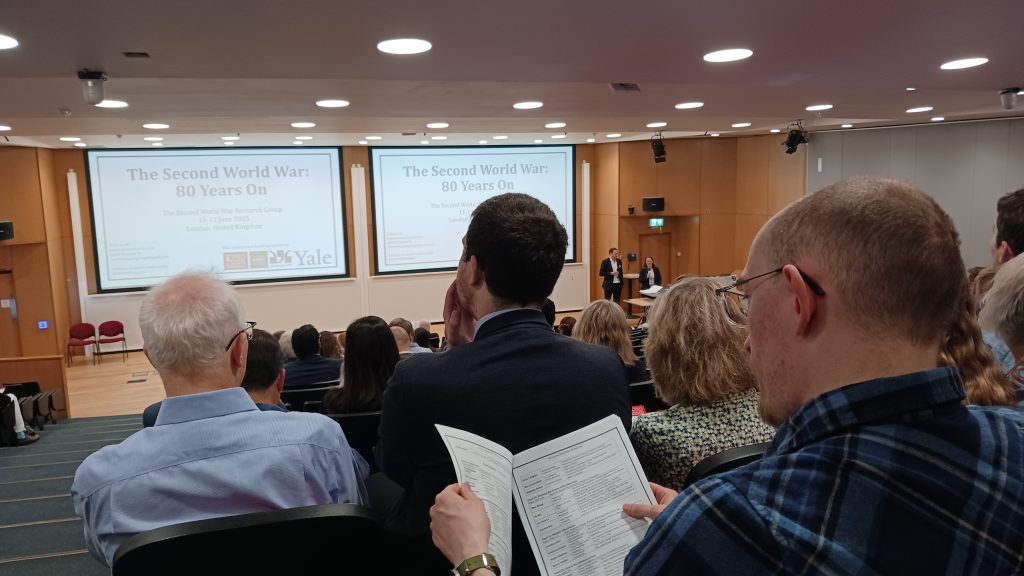
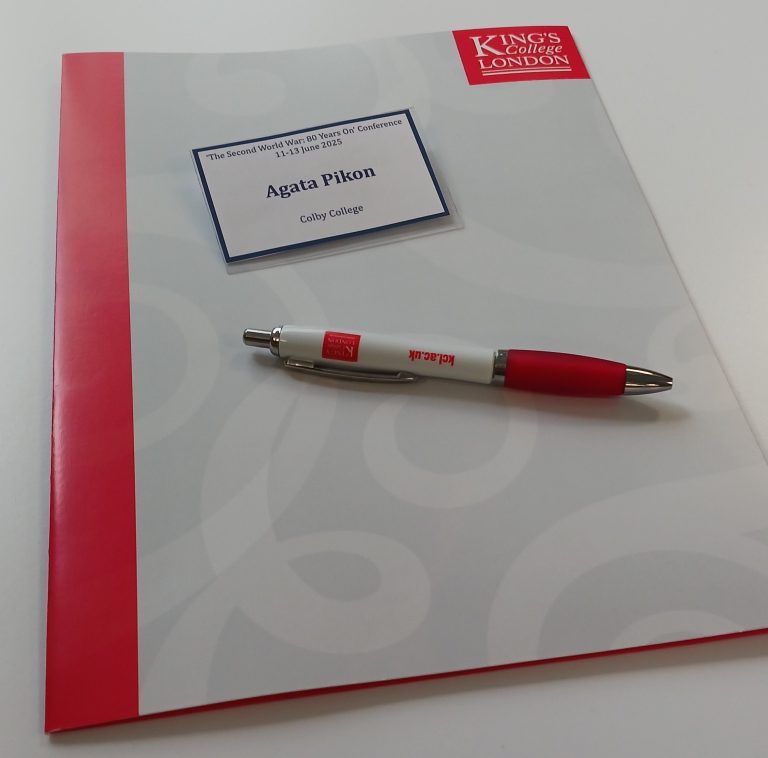
Agata Pikon ’28 used the grant to travel to London for The Second World War: 80 Years On, a two-day conference featuring panels, roundtables, and public discussions. For Pikon, the event offered perspectives on World War II that differed from those she had encountered in coursework, along with the rare chance to speak directly with historians whose work she had read. She left, she said, “inspired and grateful for the opportunity,” adding that the experience “reinforced my passion for historical research” and encouraged her to consider internships at museums abroad.
Another Big Ideas recipient, Miz Igsigne ’26, attended the Association of Internet Researchers conference at the University of Sheffield. Although they were not presenting, Igsigne described the trip as formative. “I learned a lot about what I would like to do as an academic/researcher,” they reflected. “I think undergrads should go to conferences more often even if they’re not presenting, and even if it’s not specifically an undergrad conference.”
Paco Sze ’29 and George Huberty ’28 will jointly attend the Living Latin and Greek conference organized by the Paideia Institute. After years of studying the languages primarily through texts and recordings, they are eager for the immediacy of conversation. “The prospect of having actual intellectual discourse with instructors and like-minded peers in the target language is thrilling,” they shared. Both hope the experience will offer new pedagogical approaches they can bring back to the Classics department and to fellow students on campus.
These journeys differ in destination and discipline, yet they share a common thread: students encountering the humanities as a living conversation rather than a finished body of knowledge. Whether presenting research, listening to unfamiliar perspectives, or simply discovering how scholars speak to one another, our students return with a clearer sense of the communities their work forms a part of. Through the Big Ideas grant, the CAH continues to make those encounters possible, helping students imagine futures shaped by curiosity, dialogue, and intellectual exchange.

Story by Portia Hardy, CAH Program Coordinator. Photography from students featured in the story.